Head to head
Lectric XPeak 2.0 vs Aipas M2 Pro Xterrain: which fat tire eBike wins?
By Ruben Marsh · Staff writer · Reviewed by Miles Mercer
Last updated
The verdict
For most, Lectric XPeak Off-Road Trail Bike is the stronger pick, best for riders seeking an affordable, versatile fat tire eBike with solid range and responsive motor control. Choose Aipas M2 Pro Full-Suspension Off-Road Bike for off-road riders and budget-conscious buyers wanting dual suspension and strong climbing power.

We earn commissions from links on this page, at no cost to you. Our picks stay independent. Prices are indicative and were last checked around publication — they change often, so confirm the current price on the retailer’s site. How we research & rank →
Our picks
Ranked, with the trade-offs
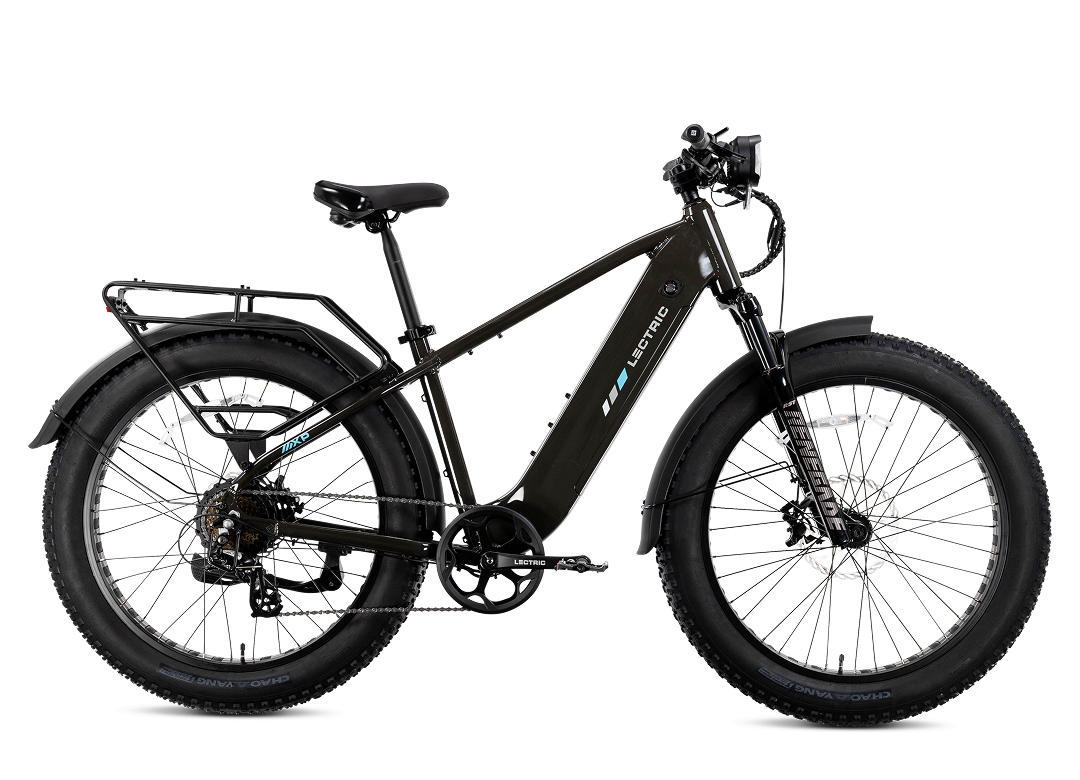
Lectric XPeak Off-Road Trail Bike
from
$1499
Torque sensor-equipped fat tire eBike with upgraded frame and responsive pedal assist for trails and mixed terrain.
Pros
- + Outstanding value with premium-level torque sensor and PWR+ technology
- + Strong components (hydraulic brakes, 203mm rotors, Shimano drivetrain) at low price
- + Excellent range on larger battery; UL certified
Cons
- – One-size-fits-most frame limits customization for very tall/short riders
- – Limited color options (white or black only)
Aipas M2 Pro Full-Suspension Off-Road Bike
from
$949
Full-suspension fat tire eBike with powerful 1800W motor and 85-mile range at exceptional value.
Pros
- + Exceptional full-suspension design at sub-$1000 price; most competitors cost $1500+
- + Powerful 1800W peak motor with 110 Nm torque for steep climbs
- + High-capacity battery and large 500-lb payload capacity
Cons
- – Heavy bike (90+ lbs) limits portability
- – Cadence-sensing assist less responsive than torque sensors; mechanical (not hydraulic) brakes
At a glance
How they compare
| Spec | Top pickLectric XPeak Off-Road Trail Bike | Aipas M2 Pro Full-Suspension Off-Road Bike |
|---|---|---|
| Price | $1499 | $949 |
| Motor | 750W rear hub (1310W peak) | 1000W rear hub (1800W peak), 110 Nm torque |
| Range | Up to 80 miles | Up to 85 miles (pedal-assist) |
| Tires | 26" x 4" puncture-resistant knobby | 26" x 4" Chaoyang fat tires |
| Weight | 64.5 lbs | ~90 lbs |
| Check price → | Check price → |
Which should you buy?
Buy the Lectric XPeak 2.0 if you want an off-road eBike that actually feels like a bike when you pedal it: its torque sensor reads your effort and modulates power accordingly, it’s lighter, and its components (hydraulic brakes, 203mm rotors, Shimano drivetrain) punch above its price. Buy the Aipas M2 Pro Xterrain if your priority is raw climbing power, a plush ride on chopped-up trails, and the lowest price of the two — you’re trading refinement and portability for muscle and cushioning.
Neither is the wrong answer. They’re built for slightly different riders. The gap between them is really a gap in philosophy: one is tuned for a natural, bike-like feel, the other for brute-force capability at a bargain price.
Motor feel: torque sensor vs cadence sensor
Winner: Lectric XPeak 2.0
This is the single biggest difference between these two bikes, and it matters more than either wattage figure. The XPeak 2.0 uses a torque sensor, which reads how hard you’re pedaling and scales motor output proportionally. Press harder, get more power; ease off, get less. Per euybike’s rundown of sensor tech, that proportional response is what makes pedal assist feel natural rather than robotic. Electric Bike Report’s hands-on notes on the XPeak echo this: even light pedal cranks move the bike with ease, but it rewards harder effort with more power, which keeps the ride feeling relaxed even at low assist levels.
The M2 Pro uses a cadence sensor, a simpler on/off system that detects pedal rotation and switches the motor on at a fixed output for that assist level. Leo Guard Bikes describes this as feeling like a sudden “kick” of power rather than a smooth ramp, which is common on cheaper hub-motor bikes. It’s not necessarily bad, but it’s a coarser tool. Himiway’s testing data adds a practical wrinkle: torque-sensor bikes tend to hit their full advertised range, while cadence-only bikes fall short by 10-15 miles. Torque sensors extend usable battery life by roughly 15-25%. So the sensor isn’t just about feel—it’s also quietly a range and efficiency advantage for the XPeak.
Suspension: hardtail vs full suspension
Winner: split decision, depends on terrain
The XPeak 2.0 is a hardtail with an 80mm-travel RST Renegade fork up front and no rear suspension. The M2 Pro is full suspension, with a 100mm coil fork plus a rear shock. Engwe’s breakdown of suspension trade-offs is useful here: hardtails are the more popular, versatile choice because they add front-end comfort and control while keeping the rear simple, efficient, and easier to maintain. Full suspension brings more weight, higher cost, and more components that can eventually need service.
If your riding is mixed terrain, gravel, light singletrack, and pavement, the XPeak’s hardtail setup with fat tires already absorbs plenty of chatter. If you’re regularly hitting rutted, rocky, or root-strewn trails, the M2 Pro’s rear shock will meaningfully cut fatigue and improve control, as HOVSCO notes is the core benefit of pairing full suspension with 4-inch tires. This one’s genuinely a toss-up based on where you actually ride.
Power and climbing: watts, torque, and what they really mean
Winner: Aipas M2 Pro Xterrain, with a caveat
On paper the M2 Pro is the stronger climber: a 1000W hub motor (1800W peak) and 110 Nm of torque against the XPeak’s 750W hub motor (1310W peak) and 85 Nm. Torque is the number that actually predicts hill-climbing and load-hauling ability, according to Optibike’s motor comparison, more so than peak wattage alone. Leo Guard Bikes frames it well: it’s a partnership between torque and watts, and a lower-wattage motor with strong torque can still feel more responsive than a high-wattage motor with weak torque.
That said, 85 Nm isn’t a weak number. Optibike points out that the Bosch Performance Line CX, one of the most respected motors in the mid-drive world, tops out at 85 Nm and remains hugely popular. So the XPeak’s torque figure sits in genuinely solid company. Both bikes here use rear hub motors rather than mid-drives, and per Himiway’s guidance, hub motors can struggle or overheat on very steep, sustained climbs (15%+ grade, 20-30 minute ascents) regardless of brand. The M2 Pro’s extra torque headroom should give it an edge on short, steep pitches and technical climbs, but neither is a mid-drive mountain bike.
Range: advertised numbers vs real-world riding
Winner: Lectric XPeak 2.0
The XPeak 2.0 is rated up to 80 miles with its larger 960Wh battery option; the M2 Pro claims up to 85 miles on its 840Wh pack. On paper that’s close. In practice, expect both numbers to shrink. Bike Besties’ analysis of manufacturer range testing notes that advertised figures come from controlled conditions: flat terrain, mild 60-70°F weather, steady 20 mph pace, and minimal wind. Real-world riding typically delivers 30-40% less. An 80-90 mile claim often becomes 50-60 miles once hills, stops, and rider weight enter the picture. Himiway also flags that fat tires themselves cost you 10-20% in range from rolling resistance alone, and cold weather can knock off another 20-30% on top of that.
The reason the XPeak still wins this category is the sensor advantage from earlier: torque-sensor bikes get closer to their advertised range than cadence-sensor bikes do, per Himiway’s testing. So while both numbers will come down from their claims, the XPeak’s proportional power delivery should hold onto more of its rated range than the M2 Pro’s on/off cadence system.
Weight and everyday practicality
Winner: Lectric XPeak 2.0, by a wide margin
At 64.5 lbs, the XPeak is heavy for a bike but reasonable for a fat tire eBike. At roughly 90 lbs, the M2 Pro is genuinely difficult to lift, load into a car, or carry up stairs. This matters more than it sounds like on a spec sheet. Himiway’s owner-feedback research found that many buyers regret heavy eBikes specifically because daily stair-carrying with a 65-75+ lb bike is impractical, and that number becomes a hard deal-breaker for anyone without ground-floor storage or an elevator. The M2 Pro is nearly 15-25 lbs past that threshold.
Epic Cycles also notes a common buyer mistake: picking a rugged-looking fat tire eBike for the adventurous look, then discovering it’s cumbersome for routine use like commuting or apartment living. If you’re storing the bike in a garage or shed and mostly riding trails, the M2 Pro’s weight is a non-issue. If you’re hauling it up stairs, into an apartment, or onto a rack solo, the XPeak is meaningfully more livable.
Brakes and everyday maintenance
Winner: Lectric XPeak 2.0
The XPeak 2.0 uses hydraulic disc brakes with 203mm rotors, paired with a Shimano drivetrain. The M2 Pro uses mechanical (cable-actuated) disc brakes. Hydraulic brakes generally offer stronger, more consistent stopping power and require less manual adjustment over time than mechanical brakes, which stretch their cables and need periodic tightening. For a heavier bike like the M2 Pro, carrying nearly 90 lbs plus rider weight down a trail, stronger hydraulic stopping power would arguably matter more, which makes the M2 Pro’s mechanical brakes a bigger compromise than they’d be on a lighter bike.
Worth flagging for both: Himiway’s owner research notes that fat tire eBikes are notoriously harder to service than standard bikes when it comes to flats, since rear wheel removal involves motor wires, washers, and torque arms. Many owners on both platforms preemptively add tire liners or sealant.
Price and value
The M2 Pro Xterrain is the cheaper bike here and, per Electric Bike Report’s review, its full-suspension setup at this price point is genuinely unusual. Most full-suspension fat tire competitors run noticeably higher. If dual suspension and climbing torque are your priorities and budget is tight, that’s a real value proposition.
The XPeak 2.0 costs more but backs it up with a torque sensor, UL certification, hydraulic brakes, and a documented reputation (Outdoor Gear Lab, Electric Bike Report) for punching above its price class on component quality. It’s the pricier bike of the two, but not by a wide margin, and what you get in return—a noticeably more refined ride—is easy to feel on day one.
A note on other bikes you may be researching
If you’re comparing fat tire eBikes broadly, you’ve probably also seen names like Heybike, Philodo, Tesgo, and Urlife come up in the same searches. These are all budget-to-mid-range fat tire brands competing in similar territory to the M2 Pro on price, and like Aipas, most lean on cadence sensors and hub motors rather than premium torque-sensor systems. If a listing you’re evaluating doesn’t specify sensor type, assume cadence until proven otherwise. Check independent reviews rather than the product page, since sensor type isn’t always advertised clearly.
How fast does the Talaria X3 Pro go?
The Talaria X3 Pro isn’t a pedal-assist eBike like the two compared here, it’s an electric off-road motorbike, and its top speed is commonly listed around 46 mph depending on configuration and battery. That puts it in a different category entirely from the XPeak 2.0 (28 mph) and M2 Pro (36+ mph), both of which are pedal-assist eBikes with throttle-limited top speeds designed for bike lanes and trails rather than motocross-style riding.
Bottom line
Pick the Lectric XPeak 2.0 for a lighter, more refined ride with a torque sensor that makes pedaling feel natural, stronger brakes, and range that holds closer to its advertised number. Pick the Aipas M2 Pro Xterrain if you want full suspension and the strongest climbing torque of the two at the lower price, and you’re not worried about hauling a 90 lb bike up stairs. For most riders splitting time between trails and paved routes, the XPeak’s balance of weight, motor feel, and component quality makes it the safer default buy.
Frequently asked questions
Is the Lectric XPeak 2.0 or Aipas M2 Pro better for steep hills?
The Aipas M2 Pro has more torque on paper (110 Nm vs 85 Nm) and a higher peak wattage, which should give it an edge on short, steep climbs. Both use rear hub motors, though, which per Himiway’s research can struggle on very steep, sustained climbs regardless of brand, so neither replaces a true mid-drive mountain eBike for serious grades.
Which is heavier to carry or store, the XPeak 2.0 or the M2 Pro?
The Aipas M2 Pro Xterrain is significantly heavier at roughly 90 lbs, versus 64.5 lbs for the Lectric XPeak 2.0. That difference matters most for apartment dwellers or anyone without ground-floor storage, since Himiway’s owner research found bikes in the 65-75+ lb range are already a common source of buyer regret for stair-carrying.
Do torque sensors really make that much difference on an eBike?
Yes. Torque sensors scale motor power to how hard you’re pedaling, giving a smoother, more bike-like feel, while cadence sensors are a simpler on/off system that can feel like a sudden kick of power. Himiway’s testing also found torque-sensor bikes get closer to their advertised range than cadence-sensor bikes, extending usable battery life by roughly 15-25%.
Are the Lectric XPeak 2.0 and Aipas M2 Pro Xterrain good for commuting?
Both are built primarily as off-road fat tire bikes, and their weight (64.5 lbs and roughly 90 lbs respectively) makes them less practical than a dedicated commuter eBike for daily lifting, locking, or stair storage. They’ll handle paved commutes fine once you’re riding, but Epic Cycles notes this is a common regret area for buyers who picked a rugged fat tire bike primarily for its adventurous look.
Keep reading
- Aventon Aventure 3 vs Aipas M2 Pro Xterrain eBike
- Lectric XPeak 2.0 vs Aventon Aventure 3
- Fat tire ebike
- Fat tire vs regular ebike
- Aipas M2 Pro Xterrain eBike review
- Lectric XPeak 2.0 review
- Aventon aventure 2 ebike
- Torque sensor vs cadence sensor ebike
Sources
- Lectric XPeak 2.0 Off-Road eBike Official Product Page
- Lectric XPeak 2.0 Long-Range eBike Official Product Page
- Lectric XPeak 2.0 First Impressions Review - Electric Bike Report
- Lectric XPeak 2.0 Review - Outdoor Gear Lab
- Lectric XPeak 2.0 Review - Freshly Charged
- Aipas M2 Pro Xterrain eBike Review - Electric Bike Report
- Aipas M2 Pro Xterrain Official Product Page
- Aipas M2 Pro Electric Bike Instruction Manual
- Motors for Electric Bikes: Compare Torque, Speed, and Range - Leo Guard Bikes
- Electric Bike Motors: The Complete 2026 Guide - EVELO
- Torque vs Watts: Electric Motor Power Guide for Beginners - Leo Guard Bikes
- Bosch CX Motor vs. DJI Avinox: 2025 E-Bike Torque Comparison - Optibike