Head to head
Lectric XPeak 2.0 vs Aventon Aventure 3: which fat-tire eBike wins in 2026?
By Ruben Marsh · Staff writer · Reviewed by Miles Mercer
Last updated
The verdict
For most, Lectric XPeak Off-Road Trail Bike is the stronger pick, best for riders seeking an affordable, versatile fat tire eBike with solid range and responsive motor control. Choose Aventon Aventure All-Terrain Adventure Bike for riders wanting modern smart features, GPS security, and smooth torque-sensor power on varied terrain.

We earn commissions from links on this page, at no cost to you. Our picks stay independent. Prices are indicative and were last checked around publication — they change often, so confirm the current price on the retailer’s site. How we research & rank →
Our picks
Ranked, with the trade-offs
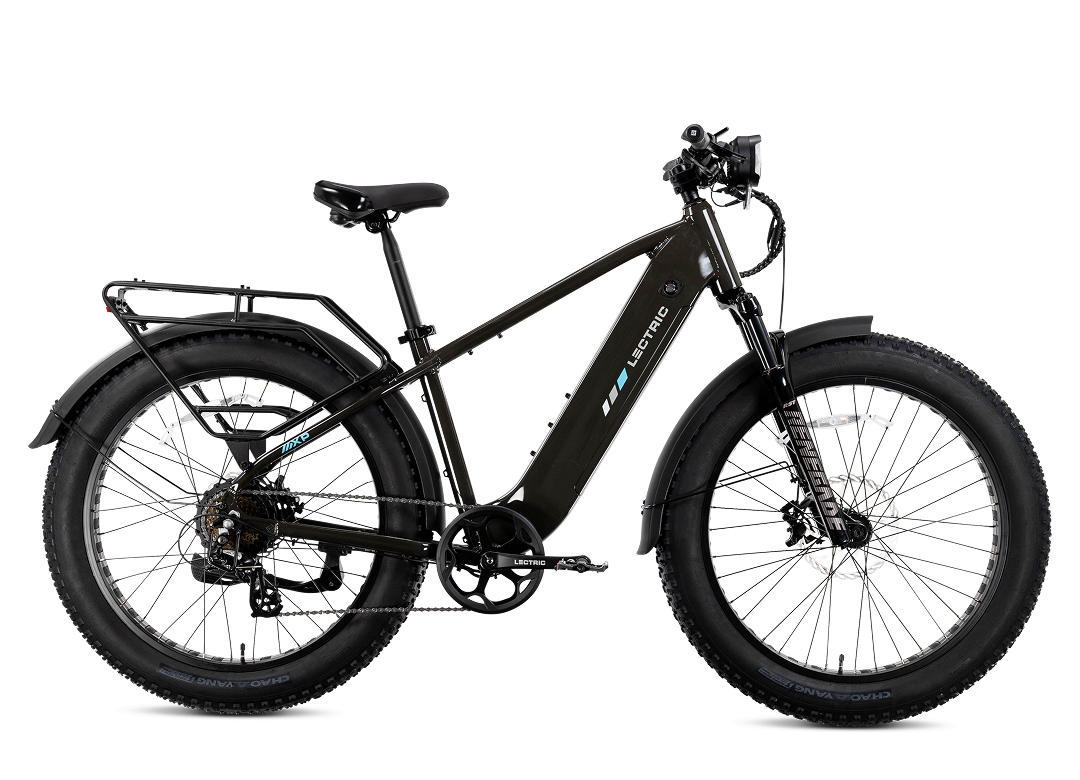
Lectric XPeak Off-Road Trail Bike
from
$1499
Torque sensor-equipped fat tire eBike with upgraded frame and responsive pedal assist for trails and mixed terrain.
Pros
- + Outstanding value with premium-level torque sensor and PWR+ technology
- + Strong components (hydraulic brakes, 203mm rotors, Shimano drivetrain) at low price
- + Excellent range on larger battery; UL certified
Cons
- – One-size-fits-most frame limits customization for very tall/short riders
- – Limited color options (white or black only)
Aventon Aventure All-Terrain Adventure Bike
from
$1999
Tech-forward fat tire eBike with ACU smart connectivity, torque sensor, and integrated security for mixed-terrain exploration.
Pros
- + Industry-leading smart bike tech (GPS, anti-theft, app control) at mid-range price
- + Smooth torque sensor with responsive motor feel; handles all terrain
- + Excellent build quality and 2-year transferable warranty
Cons
- – Heavier bike (78 lbs) challenging to lift or transport
- – 36V system unusual; integration of battery limits accessory mounting
At a glance
How they compare
| Spec | Top pickLectric XPeak Off-Road Trail Bike | Aventon Aventure All-Terrain Adventure Bike |
|---|---|---|
| Price | $1499 | $1999 |
| Motor | 750W rear hub (1310W peak) | 750W rear hub (1440W peak boost) |
| Range | Up to 80 miles | Up to 65 miles |
| Tires | 26" x 4" puncture-resistant knobby | 26" x 4" Innova fat tires |
| Weight | 64.5 lbs | 76-78 lbs |
| Check price → | Check price → |
If you want the lowest price for the most capability, buy the Lectric XPeak 2.0. If you want smart-bike features like GPS tracking and anti-theft locking, plus a dealer network for in-person service, buy the Aventon Aventure 3. Both are torque-sensor, hub-motor fat-tire eBikes aimed at the same rider, but they solve different problems. The gap in price between them buys something real: security tech and a hybrid retail model, not just a bigger battery.
I haven’t ridden either bike myself. This comparison draws on manufacturer specs and independent coverage from Electric Bike Review, EBikeReviewLab, Outdoor Gear Lab, Ebike Escape, Freshly Charged, and motor/battery explainers from em3ev.com, HPC Bikes, Riding5, and Rattan eBike, along with patterns visible across owner reviews cited in those outlets. Here’s how the two bikes stack up, dimension by dimension, and where the case for one over the other is genuinely close rather than obvious.
Motor and power: close, with a mild edge to Lectric
Both bikes run a 750W rear hub motor, the category standard at this price point because hub motors are simpler and lower-maintenance than mid-drive systems, according to em3ev.com’s electric bike motor guide. The XPeak 2.0 is rated for 1310W peak output; the Aventure 3 is rated for 1440W peak boost. Peak wattage is a burst figure measured under specific test conditions, not a number you feel while cruising, and HPC Bikes’ comparison of hub and mid-drive systems makes the same point: peak ratings tell you little about sustained climbing performance or how a motor responds at low cadence.
What matters more is that both bikes use torque sensors rather than cheaper cadence sensors. Lectric’s system is paired with its upgraded frame and drivetrain tuning; Aventon uses a dual-side torque sensor as part of its ACU platform. Torque sensors read how hard you’re pushing the pedals and modulate motor output in response, rather than simply switching power on or off based on whether the cranks are turning. Electric Bike Review’s testing of both bikes describes the assist on each as smooth and predictable, a real step up from older cadence-based fat-tire eBikes that tend to surge and cut out abruptly.
On paper, the Aventure 3’s peak number is higher. In practice, expect the two to feel comparable underfoot, since both are tuned around torque input rather than raw wattage. This dimension is close to a wash, with the Aventure 3’s rated peak giving it a slight edge on paper.
Range: advertised numbers vs what reviewers actually saw
Lectric advertises up to 80 miles on the XPeak 2.0; Aventon advertises up to 65 miles on the Aventure 3. Neither figure should be taken at face value, and both companies build these numbers around best-case conditions: a light rider, flat terrain, and the lowest assist setting. Electric Bike Review’s review of the XPeak 2.0 and its review of the Aventure 3 both note that real-world mileage on higher assist levels comes in well under the advertised ceiling, though exact mileage depends heavily on rider weight, tire pressure, terrain, and temperature, variables neither review isolates into a single clean number.
Battery chemistry explains part of the gap between the two bikes’ advertised ranges. The XPeak 2.0 runs a 48V pack, available at 20Ah for a 960Wh capacity; the Aventure 3 runs a 36V 20Ah pack using LG cells for 733Wh. Rattan eBike’s guide to long-range eBikes points to higher-voltage packs as generally more efficient at a given wattage, since lower voltage systems need higher amperage to produce comparable output, which increases resistive losses and heat. That’s a mechanical reason to expect the XPeak 2.0’s larger battery option to hold an edge in real-world range, even setting aside the advertised figures entirely.
Edge: XPeak 2.0, mainly because of the 960Wh battery option, which gives it more usable capacity in absolute terms. Buyers who stick with a smaller XPeak 2.0 battery configuration or ride mostly in high-assist modes should expect that edge to shrink considerably.
Weight and everyday usability
The XPeak 2.0’s clearest advantage is weight. Lectric lists it at 64.5 lbs; the Aventure 3 is listed at 76-78 lbs. That roughly 12-14 lb difference is easy to dismiss on a spec sheet and much harder to ignore in person, whether you’re carrying a bike up an apartment stairwell, lifting it onto a standard car rack (which won’t accommodate either bike without a hitch-mount rack), or maneuvering it into a garage corner. Both Ebike Escape’s and Freshly Charged’s reviews of the Aventure 3 flag its weight as the tradeoff for its smart-tech hardware: the GPS module, 4G radio, and integrated lock add real mass on top of an already heavy fat-tire frame.
Neither bike is light by any standard. Fat-tire eBikes in this class routinely land in the 60-80 lb range because of battery size, wide rims, and motor housing. A 12-14 lb gap is large enough to matter for anyone without a garage-level storage setup or a car rack rated for heavier eBikes.
Winner: XPeak 2.0, for anyone who has to lift, carry, or store the bike without dedicated equipment.
Smart features and security
Here’s where the Aventure 3 pulls ahead decisively. Its ACU system bundles GPS tracking, 4G connectivity, geofencing, and an integrated anti-theft e-lock, all controllable through Aventon’s companion app. Electric Bike Review’s writeup of the Aventure 3 treats this feature set as a meaningful step beyond what most fat-tire eBikes in this price range offer, since built-in cellular tracking and remote locking used to be limited to far more expensive bikes or aftermarket add-ons. If the bike lives outside, gets locked up in a shared space, or you simply want visibility if it disappears, this is a functional insurance policy rather than a gimmick.
Lectric’s approach is the opposite: no subscription ecosystem, no built-in tracking, just raw mechanical capability at a lower price. That’s a legitimate design choice for buyers who store the bike securely at home and don’t want an ongoing app or connectivity dependency, but it also means there’s essentially no recovery mechanism if the XPeak 2.0 is stolen. Owners have to rely entirely on physical locks and aftermarket trackers.
Winner: Aventure 3, clearly, for anyone who rides in a city, uses public bike parking, or simply values remote monitoring.
Components, certification, and build quality
Both bikes ship with hydraulic disc brakes and 26“ x 4“ fat tires, though the specific tire models differ: the XPeak 2.0 uses a puncture-resistant knobby tire, while the Aventure 3 uses Innova fat tires. The XPeak 2.0 pairs its tires with an RST Renegade suspension fork offering 80mm of travel, which Electric Bike Review’s review of the new frame notes as a genuine upgrade over the previous XPeak generation for handling washboard trails and root-strewn singletrack. Aventon’s suspension setup on the Aventure 3 is comparatively basic front suspension without the same travel spec, which matters less on pavement or gravel but shows up on rougher off-road terrain.
Both bikes carry UL 2849 certification for battery and electrical system safety, a distinction that Electric Bike Report’s 2026 fat-tire roundup treats as close to a baseline requirement now rather than a differentiator, given how many uncertified imports remain on the market. Where the two diverge is in the ownership experience after purchase. Aventon sells through a large dealer network, which means in-person assembly, test rides, and warranty service without shipping the bike anywhere. Lectric sells direct-to-consumer, which keeps the price down but puts more of the assembly and troubleshooting burden on the buyer, a tradeoff several owner reviews cited by Electric Bike Review mention explicitly when weighing the two brands against each other.
Neither bike is clearly better built than the other. The XPeak 2.0 has the suspension and weight advantage; the Aventure 3 has the dealer network and smart-lock hardware. Which matters more depends entirely on whether you’re optimizing for trail capability and portability or for security and serviceability.
The bottom line
There’s no universal winner here, and treating this as a single-axis comparison misses the point. The XPeak 2.0 is lighter, has a larger available battery, and includes real front suspension travel, which makes it the stronger pick for trail riders who want capability without carrying extra weight or paying for features they won’t use. The Aventure 3 is heavier and has a smaller battery, but its GPS tracking, geofencing, and integrated lock solve a problem the XPeak 2.0 doesn’t even attempt to address, and its dealer network removes a real friction point for buyers who don’t want to self-assemble or ship a bike back for warranty work. Choose based on where the bike will actually live and how much you value knowing where it is if someone tries to take it.
Frequently asked questions
Is the Lectric XPeak 2.0 or Aventon Aventure 3 better for hills?
Both handle hills reasonably well thanks to their 750W hub motors and torque sensors, but real-world range on either bike drops noticeably on sustained climbs and in cold weather, on top of whatever loss comes from terrain. The XPeak 2.0’s larger available battery option (960Wh) gives it an edge for hilly routes where you’ll lean on higher assist levels more often, since it simply carries more usable energy to draw from.
How much does bike weight matter for fat-tire eBikes like these?
More than most first-time buyers expect. At 64.5 lbs (XPeak 2.0) and 76-78 lbs (Aventure 3), both bikes are genuinely difficult to carry up stairs, load onto a standard car rack, or maneuver in tight apartment storage without a hitch-mount rack, which is a separate purchase. If you don’t have ground-floor storage or a garage, physically lift or carry something in that weight range before committing to either bike.
Are Heybike, Tesgo, Philodo, Cake, or Urlife eBikes comparable alternatives?
They compete in the broader eBike market but sit in different niches. Cake makes premium off-road-focused electric motorcycles at a much higher price point, while Heybike, Tesgo, Philodo, and Urlife are generally budget-to-mid-tier direct-to-consumer brands. None of them currently match the torque-sensor refinement, UL 2849 certification, or dealer and service infrastructure that Lectric and Aventon offer at this price tier.
Do I need UL certification on an electric bike in 2026?
It’s becoming close to a practical requirement rather than a nice-to-have. UL 2849 battery safety certification is increasingly referenced by homeowner insurance policies and HOA rules, and several state-level regulations have tightened around eBike battery safety. Both the Lectric XPeak 2.0 and Aventon Aventure 3 are UL 2849 certified, which removes this as a differentiator between them.
Which brand has better customer service, Lectric or Aventon?
,
Keep reading
- Aventon Aventure 3 vs Aipas M2 Pro Xterrain eBike
- Lectric XPeak 2.0 vs Aipas M2 Pro Xterrain eBike
- Aventon aventure 2 ebike
- Fat tire ebike
- Aventon Aventure 3 review
- Aventon Sinch 2 review
- Lectric XPeak 2.0 review
- Fat tire vs regular ebike
Sources
- Electric Bike Report – Best Fat Tire Electric Bikes 2026
- Outdoor Gear Lab – The Best Electric Bikes of 2026 | Lab Tested & Ranked
- EBikeReviewLab – Lectric XPeak 2.0 Review 2025: Best Electric Fat Bike
- Electric Bike Review – Lectric XPeak 2.0 Review: New Frame, More Power and Same Price
- Electric Bike Review – Aventon Aventure 3 Review
- Ebike Escape – Aventon Aventure 3 Review: Still The Best $2,000 Fat Tire Ebike?
- Freshly Charged – Aventon Aventure 3 Review: Tech upgrades, real power, and smarter security
- EM3EV – Electric Bike Motor Guide: Hub vs Mid-Drive, Power & Torque
- HPC Bikes – Mid-Drive vs. Hub Motor E-Bikes: Which Is Better for Speed, Torque & Real-World Performance
- Riding5 – E-Bike Trends 2026: Battery Range, Smart Features & New Safety Laws
- Rattan eBike – Long-Range E-Bikes Explained: What Really Matters in 2026
- EM3EV – Best Electric Battery for Bike: 2026 Safety & Range Guide