Buying guide
Best commuter electric bike in 2026: 9 models worth your money
By Ruben Marsh · Staff writer · Reviewed by Miles Mercer
Last updated
We earn commissions from links on this page, at no cost to you. Our picks stay independent. Prices are indicative and were last checked around publication — they change often, so confirm the current price on the retailer’s site. How we research & rank →
Our picks
Ranked, with the trade-offs
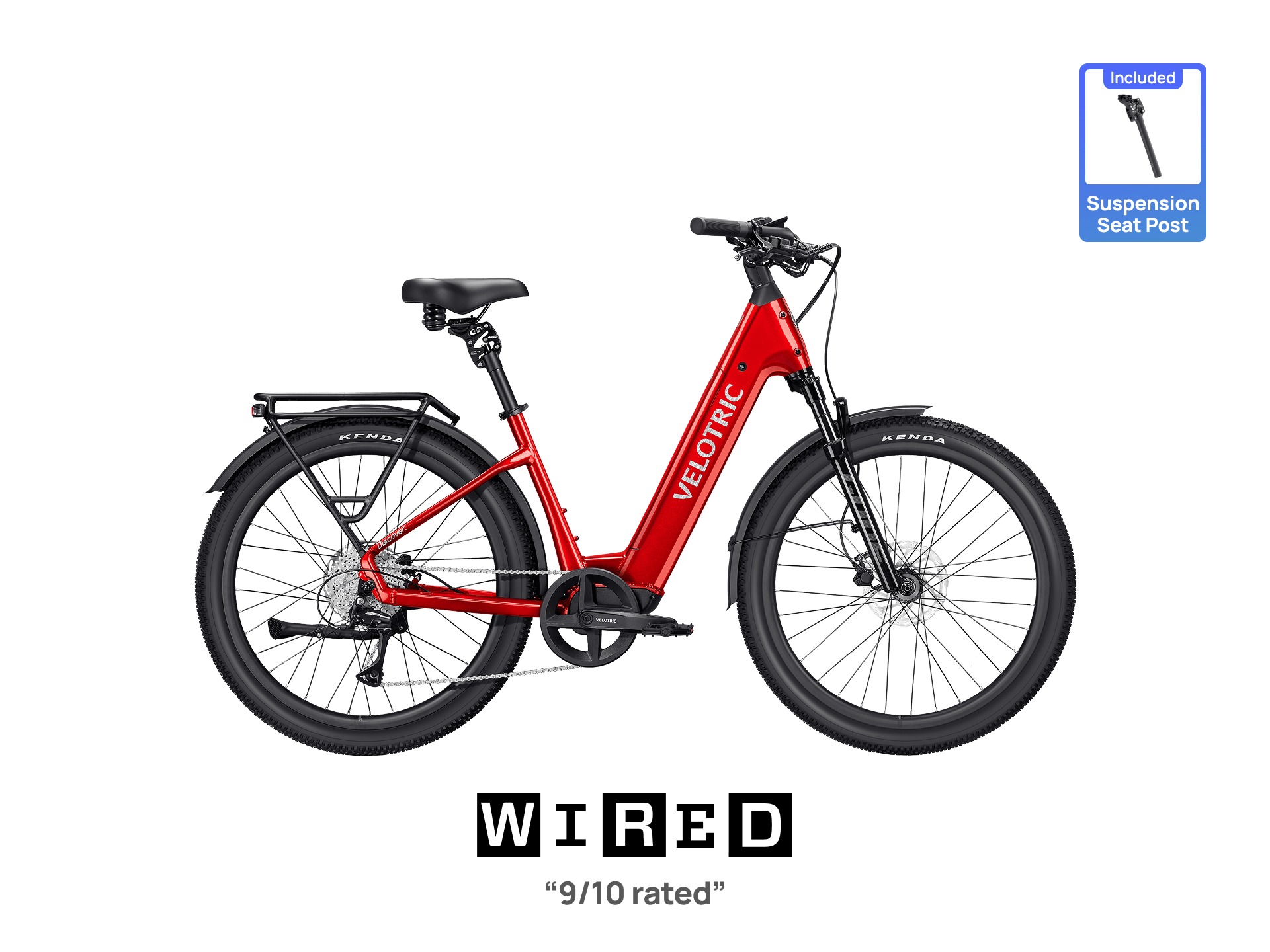
Velotric Discover 3 Commuter
from
$1999
Next-gen comfort commuter with 750W motor delivering smooth assistance for daily commuting and longer rides with extended battery range.
Pros
- + Exceptional comfort with ComfortMax™ ergonomic design and air suspension fork
- + Extended range and responsive motor for commuting or weekend rides
- + Integrated smart features including Apple Find My and dual torque/cadence sensing
Cons
- – Step-through frame only may not suit all riders
- – Hub motor not ideal for technical trails
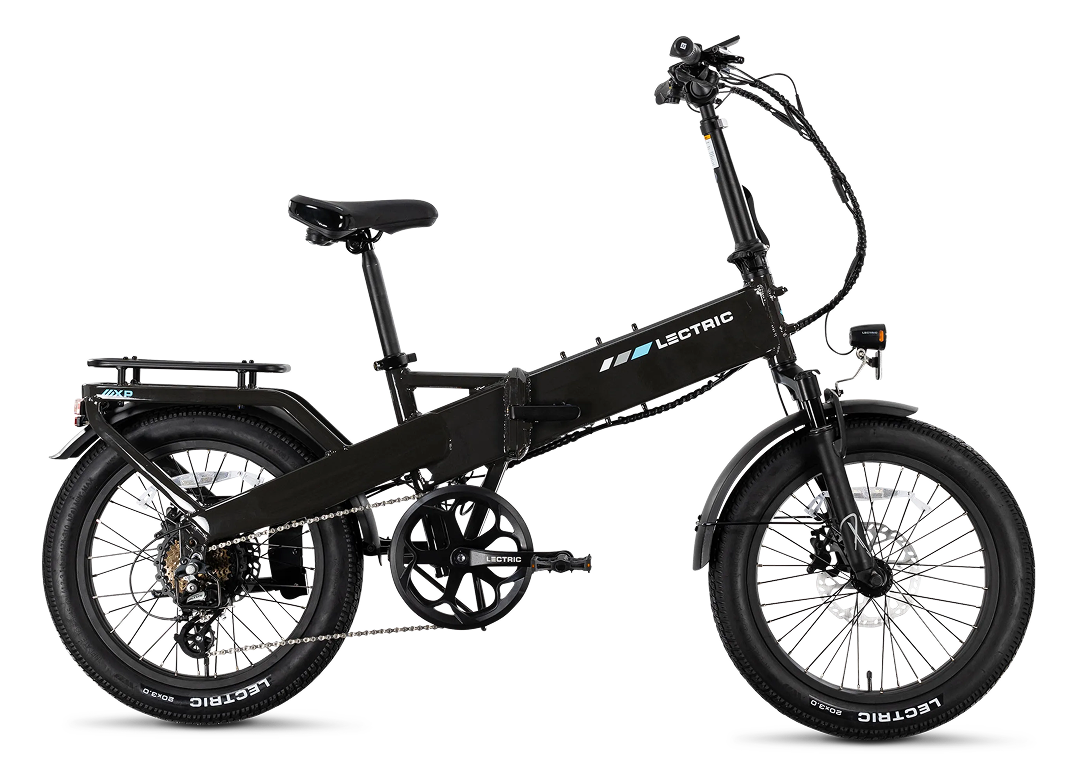
Lectric Folding Commuter
from
$999
Foldable urban commuter with torque sensor, hydraulic brakes, and up to 50-mile range in a compact 36-inch package.
Pros
- + Remarkably compact folding design with quick-release pedals
- + Torque sensor, hydraulic brakes, and color TFT display at entry price point
- + Rides solid and stable despite folding—no compromise to feel
Cons
- – Relatively heavy at 72 lbs when unfolded; hauling upstairs requires effort
- – Fork contacts and scratches frame when folded—add rubber bumpers to prevent cosmetic damage
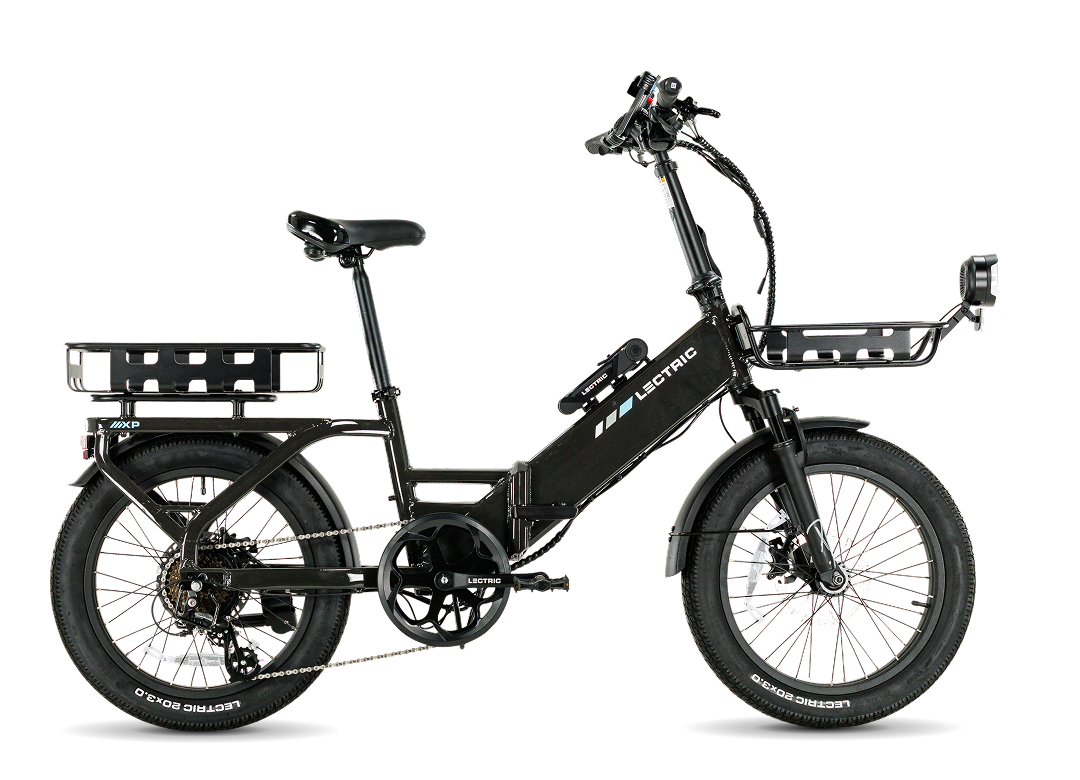
Lectric Extended Range Folder
from
$1299
Upgraded folding commuter with 750W motor, 840Wh battery delivering up to 85 miles, plus suspension seatpost for added comfort.
Pros
- + 67% larger battery than base model for genuine long-distance capability
- + Suspension seatpost and upgraded headlight justify the $300 premium
- + Maintains compact fold—same portability with significantly more power
Cons
- – No meaningful weight reduction despite upgraded components—still a two-person carry
- – Battery can rattle in frame on rough roads; foam padding ($5 DIY fix) helps

Aventon Smart Commuter
from
$1899
Class 3 commuter with GPS-enabled ACU security (wheel lock, geofencing, motion alerts), torque sensor, and 60-mile range.
Pros
- + Best-in-class anti-theft: GPS tracking, electronic wheel lock, geofencing via app
- + Torque sensor mimics natural pedaling feel—rides like a real bike with assist
- + Integrated lights, fenders, rack, and hydraulic brakes arrive ready to commute
Cons
- – 4G GPS tracking drains 2-3% battery daily even when parked—requires regular topping off
- – GPS subscription required after first year ($20/year or $2/month) for full security features
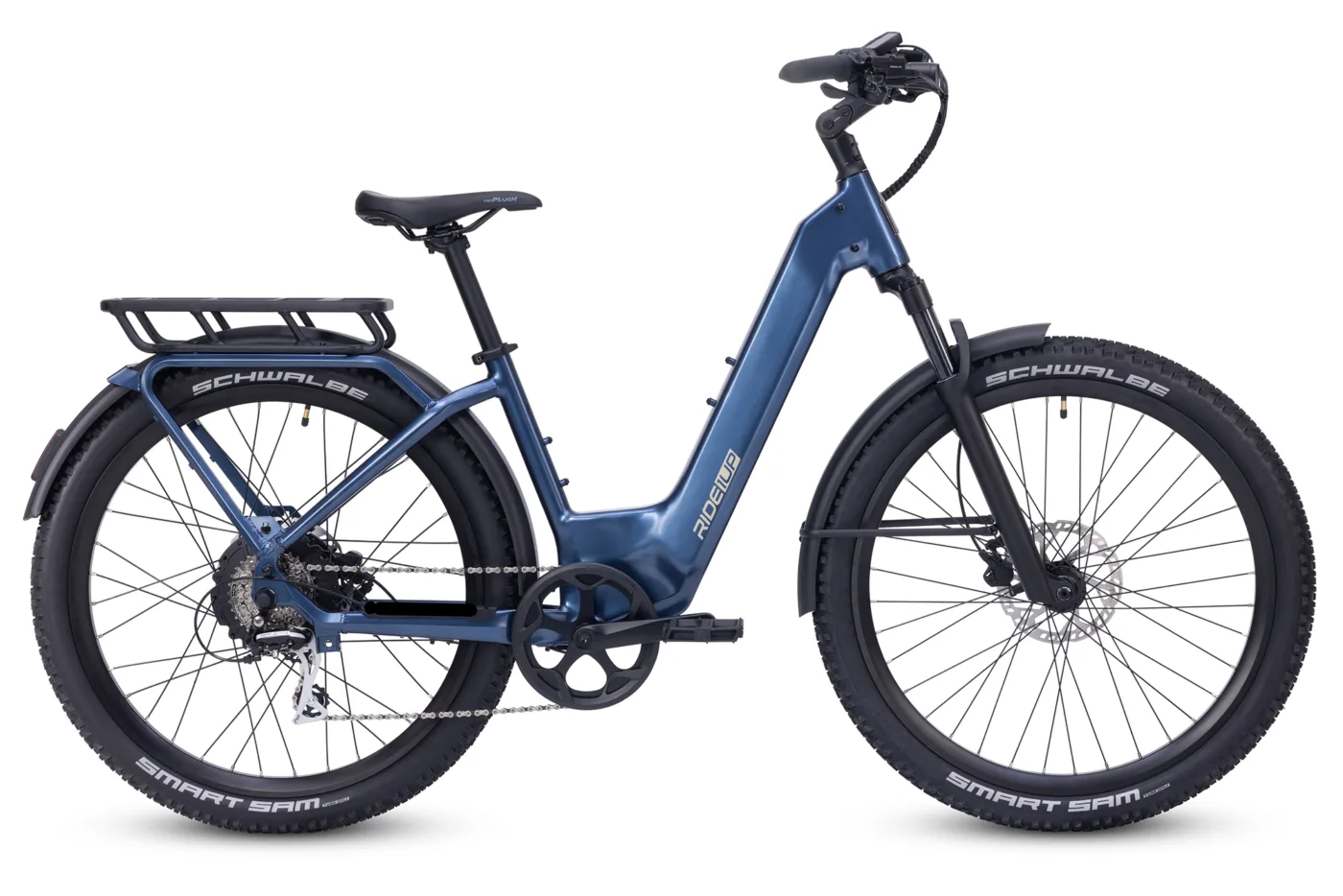
Ride1Up Utility Commuter
from
$1695
Modular do-it-all commuter with 750W motor, dual-sensor system (torque/cadence switchable), 440-lb weight capacity, and modular accessory system.
Pros
- + Dual-sensor system lets riders switch between responsive torque and relaxed cadence modes mid-ride
- + 150-lb rear rack and modular Connect+ accessory system handle cargo, child seats, passengers
- + 95Nm torque is top-tier for hill climbing—Ride1Up's strongest motor
Cons
- – Bulky and heavy at 70 lbs; apartment storage or carrying challenging
- – Standard saddle not optimized for long rides; aftermarket upgrade recommended
Ride1Up Minimalist Commuter
Stripped-down Vorsa without fenders or rack, using narrower tires for 12 lbs weight savings while retaining 95Nm motor.
Pros
- + Same powerful 750W/95Nm motor as standard Vorsa for fraction of weight penalty
- + Smooth torque-sensor feel combined with option to switch to cadence mode
- + Intui-Drive system rivals mid-drive smoothness at hub-motor price point
Cons
- – Despite 'Lite' name, 61 lbs is still heavy for apartment dwellers—not truly lightweight
- – Lacks integrated lights, rack, fenders; mounting points included if you add later
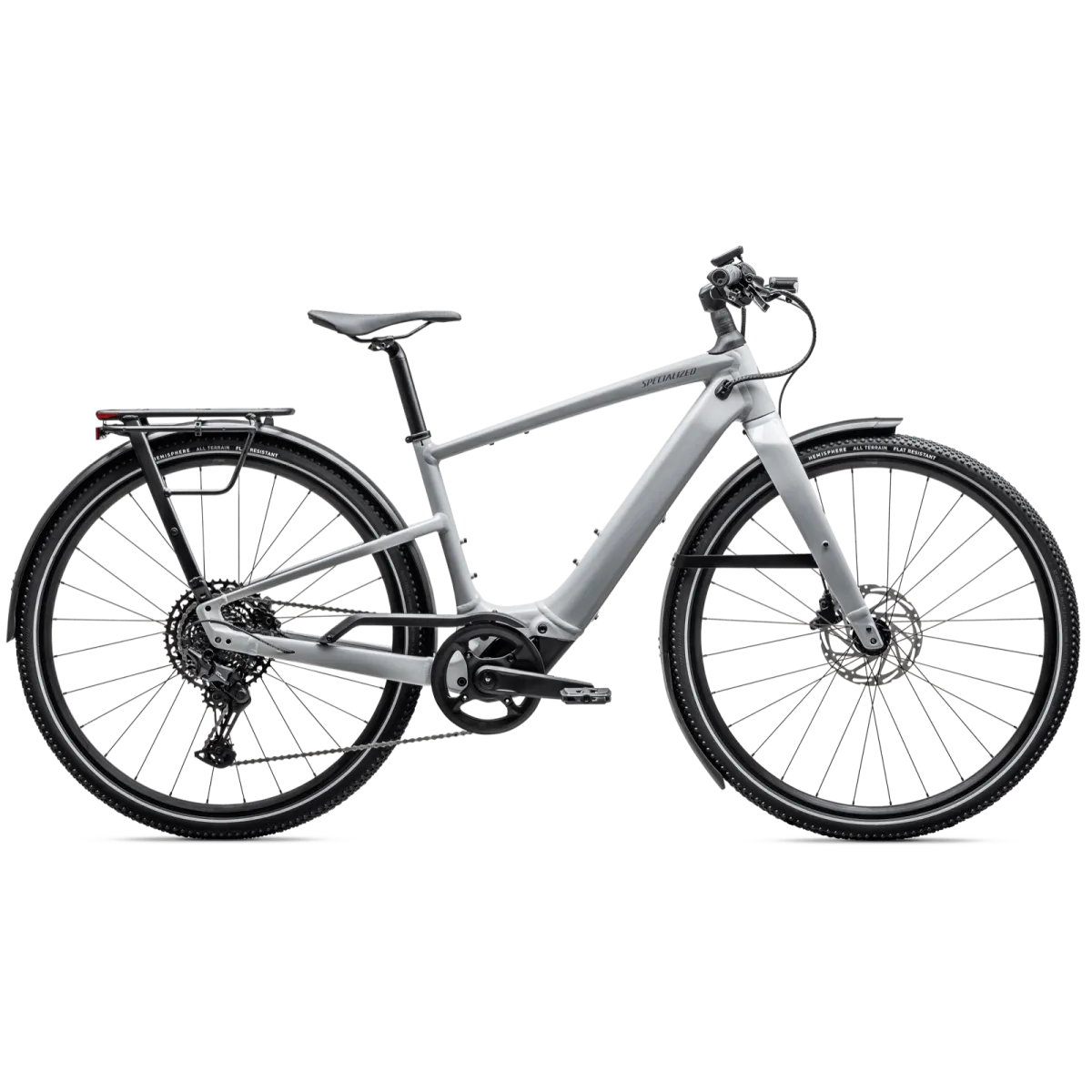
Specialized Lightweight Premium
from
$4599
Ultralight (44 lbs) carbon-optional commuter with 320W Bosch mid-drive, integrated 520Wh battery, and refined 'it's you only faster' feel.
Pros
- + Lightest full-featured commuter at 44 lbs; ride feels like a normal bike with assist, not powered vehicle
- + Bosch mid-drive delivers proportional, natural power delivery—rewards your pedaling effort
- + Fenders, lights, integrated rear rack, and Future Shock suspension included; genuinely ready to ride
Cons
- – Motor is less powerful than hub alternatives (320W vs 750W); struggles on steep hills without rider input
- – Battery not removable; integrated design means limited range extender compatibility
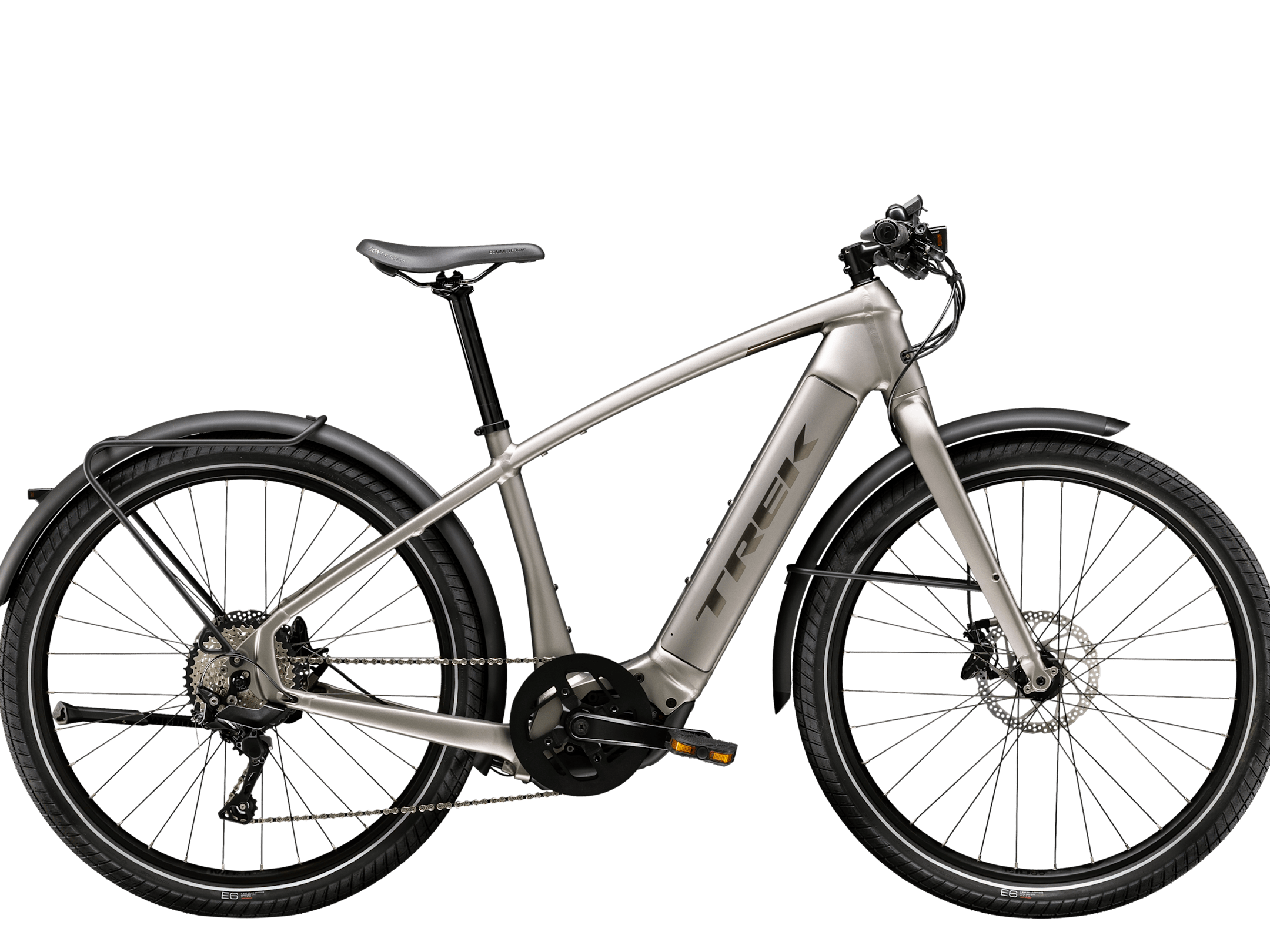
Trek Bosch Commuter
from
$3499
Refined urban commuter with Bosch Performance Line motor, dual suspension, hydraulic disc brakes, and extensive dealer support.
Pros
- + Bosch Performance Line mid-drive is industry-standard for smooth, responsive hill climbing
- + Full-spec commuter package: fenders, lights, integrated rack, hydraulic brakes—arrive ready
- + Extensive global dealer network ensures warranty service and parts availability
Cons
- – Bosch systems are established technology but less innovative than newer proprietary platforms
- – Motor has less peak power than newer hub alternatives; slower from standstill in heavy assist
The verdict
Our top picks at a glance
Commuters seeking comfort and reliability on varied terrain and longer distances without sacrifice.
Apartment dwellers, RV enthusiasts, and multi-modal commuters who prioritize portability and convenien…
Heavier riders, those facing hills regularly, and commuters carrying cargo who need extended range wit…
Urban commuters concerned about theft, riders wanting polished build quality and dealer support, and t…
At a glance
How they compare
| Spec | Top pickVelotric Discover 3 Commuter | Lectric Folding Commuter | Lectric Extended Range Folder |
|---|---|---|---|
| Price | $1999 | $999 | $1299 |
| Motor | 750W hub (1100W peak), 75Nm torque | 500W rear hub (1,092W peak), 55Nm torque | 750W rear hub (1,310W peak), 85Nm torque |
| Range | Up to 80 miles | Up to 50 miles | Up to 85 miles |
| Weight | Approx 57 lbs | 72 lbs | 72 lbs |
| Battery | 730Wh Samsung/LG 21700 | 48V 10.4Ah (499Wh) | 48V 17.5Ah (840Wh) |
| Check price → | Check price → | Check price → |
Top 3 of 8 shown — full shortlist above.
Ruben Marsh has spent the week cross-referencing spec sheets, owner forums, and warranty fine print for this segment, and the short answer is: if you want the best all-around value in a commuter e-bike right now, start with the Aventon Level 3. It pairs a torque sensor that actually feels like pedaling with GPS-based anti-theft tech that no competitor here matches, and it arrives with fenders, lights, and a rack already bolted on. If your budget is tighter or you live somewhere the bike has to fit in a closet, the Lectric XP4 500W is the smarter first stop. If money isn’t the constraint and you want a commuter that doesn’t feel like a commuter, the Specialized Turbo Vado SL 2 5.0 is the one to test-ride.
None of these are universal winners. A folding hub-motor bike and a 44-lb Bosch mid-drive solve different problems, so the picks below are organized by who each bike actually suits, not by a single ranked list pretending one spec sheet beats another.
Lectric XP4 500W — best budget folding commuter
At this price point, a torque sensor and hydraulic brakes are not standard equipment on most folding bikes, but Lectric includes both. The 500W rear hub motor (1,092W peak) and 55Nm of torque put it squarely in the range that technical guides consider sufficient for flat-to-moderate terrain, and the 499Wh battery is rated for up to 50 miles, though real-world range on hub-motor commuters typically lands at 60–70% of the advertised figure once hills, wind, and stop-and-go traffic get involved.
The fold is genuinely compact (a 36-inch package), and the ride doesn’t feel like a compromise despite the hinge in the middle — owner reviews consistently note it feels stable at speed, not flexy or foldy. The catch is the 72-lb curb weight. That’s heavy for a folding bike by the segment’s own standard (folding models typically run 35–50 lbs), so carrying it up stairs is a two-handed affair, not a one-arm grab. The fork also contacts the frame when folded, and owners recommend adding rubber bumpers to stop cosmetic scratching.
Best for: apartment dwellers, RV owners, and multi-modal commuters who need it to fit in a car trunk or elevator more than they need it to be light.
Lectric XP4 750W Long-Range — best for hills and cargo without losing the fold
This is the XP4 for people who outgrow the base model’s range or torque. The 750W motor and 85Nm of torque move it into the bracket that technical guides flag as necessary for hilly terrain, and the 840Wh battery, 68% larger than the base XP4’s, is a legitimate jump rather than a marketing bump. Lectric also added a suspension seatpost and an upgraded headlight, which matter more on a daily commute than they sound like they would on a spec sheet.
The trade-off: none of that extra battery and motor comes with a weight cut. It’s still 72 lbs, so the portability story is identical to the base model, just with more range and torque underneath it. A few owners report battery rattle in the frame on rough pavement; foam padding is a common and cheap DIY fix.
Best for: heavier riders, hill-heavy routes, or anyone hauling cargo who wants the base XP4’s fold without the base XP4’s range ceiling.
Aventon Level 3 — best for theft-prone urban commuting
Theft is one of the real, under-discussed risks of e-bike ownership, and this is the only bike in this roundup built around that problem specifically. The Level 3’s ACU system bundles GPS tracking, an electronic wheel lock, geofencing, and motion alerts through Aventon’s app. That’s a meaningfully different security posture than a cable lock and hope.
On the ride side, the 60Nm torque sensor is frequently singled out in owner reviews for feeling like a natural pedaling boost rather than an on/off surge, and Aventon’s real-world tested range of 52–70 miles is refreshingly specific compared to manufacturers who only quote best-case numbers. It ships commute-ready: integrated lights, fenders, rack, and hydraulic brakes. The costs are the GPS itself, which draws 2–3% of battery daily even parked, so it needs regular top-offs, and a subscription (after a free first year) required to keep the full security suite active.
Best for: urban riders parking in public, anyone who’s had a bike stolen before, and buyers who want dealer-backed build quality over raw motor output.
Ride1Up Vorsa — best for versatility and hauling
The Vorsa’s 95Nm of torque is the highest in this lineup and sits in the range that technical guides reserve for steep grades and cargo hauling. Combined with a 440-lb total weight capacity, a 150-lb-rated rear rack, and Ride1Up’s modular Connect+ accessory system, this is the bike built to also be a cargo hauler, a kid-hauler, and a weekend bike, not just a commuter.
The dual-sensor system is the other standout: you can switch between a responsive torque-sensor feel and a more relaxed cadence mode depending on the ride, which few bikes at this price offer as a toggle rather than a fixed choice. At 70 lbs, though, it’s bulky to store or carry, and the stock saddle is a known weak point that most long-term owners end up upgrading.
Best for: riders who want one bike to cover commuting, cargo runs, and passenger hauling instead of buying separate bikes for each.
Ride1Up Vorsa Lite — best for agility without losing the Vorsa’s power
Strip the fenders, rack, and swap to narrower tires, and you shave 12 lbs off the Vorsa without touching the motor: the Vorsa Lite keeps the same 750W/95Nm drivetrain in a 61-lb frame. Some real-world testing has reportedly stretched range to 105 miles, well above the 30–60 mile spec range, though that almost certainly reflects low-assist, favorable-condition riding rather than a typical commute.
Riders consistently compare the Intui-Drive system’s smoothness to mid-drive bikes costing more, which is a notable claim for a hub-motor platform. But “Lite” is relative: 61 lbs is still well above what most apartment dwellers consider carriable, and you lose the integrated lights, rack, and fenders that come stock on the standard Vorsa (mounting points are included if you want to add them later).
Best for: commuters who want the Vorsa’s torque and hill-climbing without its bulk, and don’t mind assembling their own cargo setup.
Velotric Discover 3 — best for comfort on longer or rougher commutes
The Discover 3’s air suspension fork and ComfortMax ergonomic design target a different problem than raw power or portability: ride quality over distance. Its 75Nm of torque and 730Wh battery (rated up to 80 miles) put it comfortably in the range built for daily commuting plus longer weekend rides, and dual torque/cadence sensing plus Apple Find My integration are smart inclusions at this price tier.
At roughly 57 lbs, it’s lighter than most bikes here with a full-size battery, though the step-through-only frame won’t suit every rider’s preference, and like all hub-motor bikes, it’s not built for technical or steep terrain the way a mid-drive is.
Best for: commuters riding longer distances or rougher pavement who want comfort prioritized without giving up range.
Specialized Turbo Vado SL 2 5.0 — best for riders who want it to feel like a bike, not a moped
At 44 lbs, this is dramatically lighter than every hub-motor bike in this roundup, and that weight, combined with a 320W Bosch mid-drive, is the whole point. Mid-drive motors deliver power more proportionally to your own pedaling effort, and that shows up here: it’s the bike reviewers and owners describe as feeling like “you, but faster” rather than a powered vehicle carrying a rider.
The fully integrated 520Wh battery keeps the frame clean and the fenders, lights, integrated rack, and Future Shock suspension mean it arrives ready to commute, no accessory shopping required. The 320W motor is genuinely less powerful than the 750W hub motors in this list, though, and it will ask more of your legs on steep climbs. The battery isn’t removable, which limits charging flexibility, and the price tag reflects Specialized’s brand positioning as much as its component list.
Best for: fitness-minded commuters and anyone who’s ridden a hub-motor e-bike and found it feels too much like a motorcycle.
Trek Allant+ 8S — best for dealer support and proven mid-drive reliability
Bosch’s Performance Line motor is the industry’s most established mid-drive platform, and the Allant+ 8S leans into that: smooth, responsive hill-climbing power backed by Trek’s global dealer network for warranty service and parts, which matters more than most spec sheets suggest once something actually breaks. At 52 lbs it’s reasonably light for a full-suspension commuter with hydraulic disc brakes, integrated rack, fenders, and lights already fitted.
The honest trade-off is that Bosch’s system, while dependable, isn’t the most powerful or the newest tech here; its peak output trails newer proprietary hub motors, so acceleration from a stop is more measured. This is a bike for buyers who value a known quantity over the newest spec.
Best for: riders who prioritize long-term dealer support and proven mid-drive engineering over chasing the highest peak-power number.
How to choose a commuter e-bike in this segment
Start with three questions before you look at price: how far is your commute, do you need to carry the bike (stairs, elevator, car trunk), and does your route include real hills?
-
Torque, not just wattage. Technical guides generally put 40–50Nm as sufficient for flat urban riding, 50–70Nm as a solid all-rounder, and 60–80Nm (85Nm+ for steep grades) as necessary once hills or cargo enter the picture. The Vorsa and Vorsa Lite’s 95Nm lead this list for a reason.
-
Weight is a portability decision, not a fitness one. Every bike in this roundup except the Vado SL sits between 57 and 72 lbs. If you’re carrying it upstairs regularly, prioritize the lightest option that meets your range needs rather than chasing maximum battery capacity.
-
Discount advertised range by 30–40%. There’s no industry-standard range test, so manufacturers post best-case numbers from flat routes and ideal rider weight. Expect real-world range around 60–70% of the claimed figure once hills, cold weather (which alone can cut capacity 15–20%), and stop-and-go traffic are factored in.
-
Hub motors vs. mid-drives. Hub motors (all but the Specialized and Trek here) are simpler, cheaper to service, and fine for flat commuting. Mid-drives handle hills and varied terrain more efficiently because they multiply torque through the bike’s own gearing, but they need more drivetrain maintenance and generally cost more.
-
Factor in security if you’re parking outside. E-bike theft is a real and rising cost of ownership. The Aventon’s built-in GPS and electronic lock are a legitimate differentiator if your commute ends with the bike locked on a street rather than in a garage.
Does an e-bike actually replace car trips for commuting?
Yes, for a large share of riders. Academic reviews estimate that 35–50% of e-bike journeys substitute for a car trip that would otherwise have happened, with commuter e-bikes driving most of that substitution in metro areas. E-bikes are also roughly 18 times more energy-efficient than cars per the National Library of Medicine, and a single e-bike commuter can save around 225 kg of CO2 per year by replacing car trips, according to compiled research from Diesel eBikes.
Is a heavier torque number always better for commuting?
No. More torque means faster acceleration and better hill performance, but it also drains the battery faster and isn’t necessary if your commute is flat. Technical guides consistently put 40–50Nm as enough for flat, moderate-speed urban riding, reserving 60Nm-plus for hills or cargo hauling, so matching torque to your actual route beats simply buying the highest number available.
How much should you trust a manufacturer’s stated range?
Treat it as a ceiling, not an expectation. There’s no unified industry standard for range testing, and manufacturers typically test under ideal conditions: flat roads, a roughly 165-lb rider, and a constant 15–20 mph pace. Real-world commuting, with hills, stops, wind, and temperature swings, generally delivers 60–70% of the advertised figure, so a bike rated for 60 miles should realistically be budgeted at 36–42 miles for daily use.
Bottom line
For most commuters, the Aventon Level 3 is the safest default: it rides like a real bike, arrives fully equipped, and solves the theft problem nobody else here addresses. Go with the Lectric XP4 500W if portability and price matter more than polish, step up to the XP4 750W or either Vorsa if your route has hills or cargo, and reserve the Specialized or Trek for buyers who’ve decided a mid-drive’s ride feel and dealer network are worth the premium.
Keep reading
- Electric bike
- Electric utility bike
- Aventon soltera ebike
- Aventon Aventure 3 review
- Velotric ebike
- Aventon pace ebike
- Aventon aventure 2 ebike
- HappyRun Tank G100 Pro review
Sources
- Incorporating active commuting into daily life: a narrative review of e-bikes’ impact on health and urban air quality
- E-Bike Statistics & Data 2026 - Diesel E-Bikes
- Electric Bike Statistics & Facts 2026 - TheRoundup
- E-Bike Market Size, Share & Trends 2026-2031 - Mordor Intelligence
- Global E-bike Market Analysis 2026-2036 - Future Market Insights
- E-Bike Market Size & Growth Analysis - Precedence Research
- U.S. E-Bike Market Size & Share 2026-2035 - GM Insights
- E-Bike Market Size, Share & Forecast 2026-2035 - InsightAce Analytic
- Why Electric Bikes Are Revolutionizing Urban Commuting - Macfox
- Health benefits of electrically-assisted cycling: a systematic review - International Journal of Behavioral Nutrition and Physical Activity
- Increasing Active Transportation Through E-Bike Use - PMC
- Health benefits of electrically-assisted cycling - NCBI
FAQ
Frequently asked questions
- Are Heybike, Philodo, Tesgo, or Urlife e-bikes worth considering for commuting?
- These brands sell budget-tier e-bikes that show up frequently in online searches, but none currently match the torque-sensor feel, brake hardware, or documented real-world range testing of the models in this guide. If you're comparing them, check specifically for a torque (not just cadence) sensor, hydraulic disc brakes, and UL 2849 safety certification, since budget import brands vary widely on all three.
- What is the Cake e-bike, and how does it compare to commuter models like these?
- Cake is a Swedish brand known for lightweight, minimalist off-road and utility e-bikes rather than dedicated commuter builds with fenders, racks, and lights included standard. It's a different category: riders wanting an urban commuter ready to ride out of the box are better served by purpose-built options like the Aventon Level 3 or Velotric Discover 3.
- Do I need a Class 3 e-bike for commuting?
- Not necessarily. Class 3 e-bikes (pedal-assist to 28 mph, like every model in this guide) suit longer commutes where higher speed saves real time, but Class 1 bikes, capped at 20 mph pedal-assist only, made up 61% of the US market in 2025 per GM Insights and remain fully adequate for shorter urban routes. Check local regulations too, since Class 3 access to bike paths varies by city.
- How long do commuter e-bike batteries actually last?
- Most lithium-ion e-bike batteries are rated for around 1,000 charge cycles, translating to roughly 2–5 years of daily commuting before capacity noticeably declines. You can extend that lifespan by keeping the charge between 20–80% rather than routinely running it to empty or leaving it at 100%, per guidance from Bicycle Warehouse and eBikes.org.